Reading FEMA Decision Letters and Filing an Appeal

Understand your determination letter, protect your Verified Loss, and submit an appeal that meets federal requirements.

What Is a FEMA Decision Letter?

A FEMA decision letter, also called a determination letter, is the written notice FEMA sends after reviewing an application for Individual Assistance. The letter states one of three outcomes (Approved, Denied, or Partial Approval), the reason for the decision, and the applicant's right to appeal. The letter also contains the applicant's FEMA application number and disaster number, which must appear on every document submitted with an appeal. For many survivors, the decision letter is the most important document in the recovery process, because the deadline it sets (60 days from the date of the letter under 44 CFR § 206.115) is the last opportunity to correct the record before the disaster file is closed. Understanding the letter is the first step to protecting eligibility for both FEMA assistance and long-term HUD CDBG-DR grants, which rely on the FEMA Verified Loss figure that the letter establishes.

Three Reasons to Read the Decision Letter Carefully

The decision letter is not a formality. It identifies the reason for the decision, the documents FEMA is willing to accept, and the deadline that governs the appeal. Reading it carefully determines whether the appeal is possible and what evidence it requires.

The Stated Reason

The letter states why FEMA made its decision. Common reasons include missing insurance documents, unproven occupancy, unproven ownership, or a Verified Loss below the threshold. The stated reason determines the evidence the appeal must supply.

Key Responsibility: Match the appeal evidence to the reason stated in the letter.

The Verified Loss Figure

FEMA's inspection produces a Verified Loss (FVL) figure, which may be lower than the actual damage. The FVL figure is used by HUD CDBG-DR programs to determine eligibility, so an understated FVL can disqualify a household from long-term grants years later.

Key Responsibility: Appeal an understated FVL within the 60-day window.

The Appeal Deadline

The letter states the deadline to appeal, which is 60 days from the date of the notification under 44 CFR § 206.115. A late appeal is not considered. The deadline is measured from the date on the letter, not the date the applicant receives it.

Key Responsibility: Submit the appeal before the 60-day deadline expires.

Common Reasons for FEMA Denial and the Documents That Resolve Them

FEMA decision letters cite specific reasons for denial. Each reason has a corresponding set of documents that can support an appeal. The list below reflects the reasons most often cited in FEMA determination letters.

  • Insurance Documents Missing or Insufficient: Provide documents from the insurance company that detail coverage or the settlement amount, and show that it is insufficient to make essential repairs, provide a place to stay, or replace contents. FEMA cannot duplicate insurance benefits.
  • Occupancy Not Proven: Provide utility bills, a driver's license, or a lease that shows the damaged home was the primary residence at the time of the disaster.
  • Ownership Not Proven: Provide a mortgage statement, insurance documents, tax receipts, or a deed. If the deed is not available, contact local or parish officials for a copy.
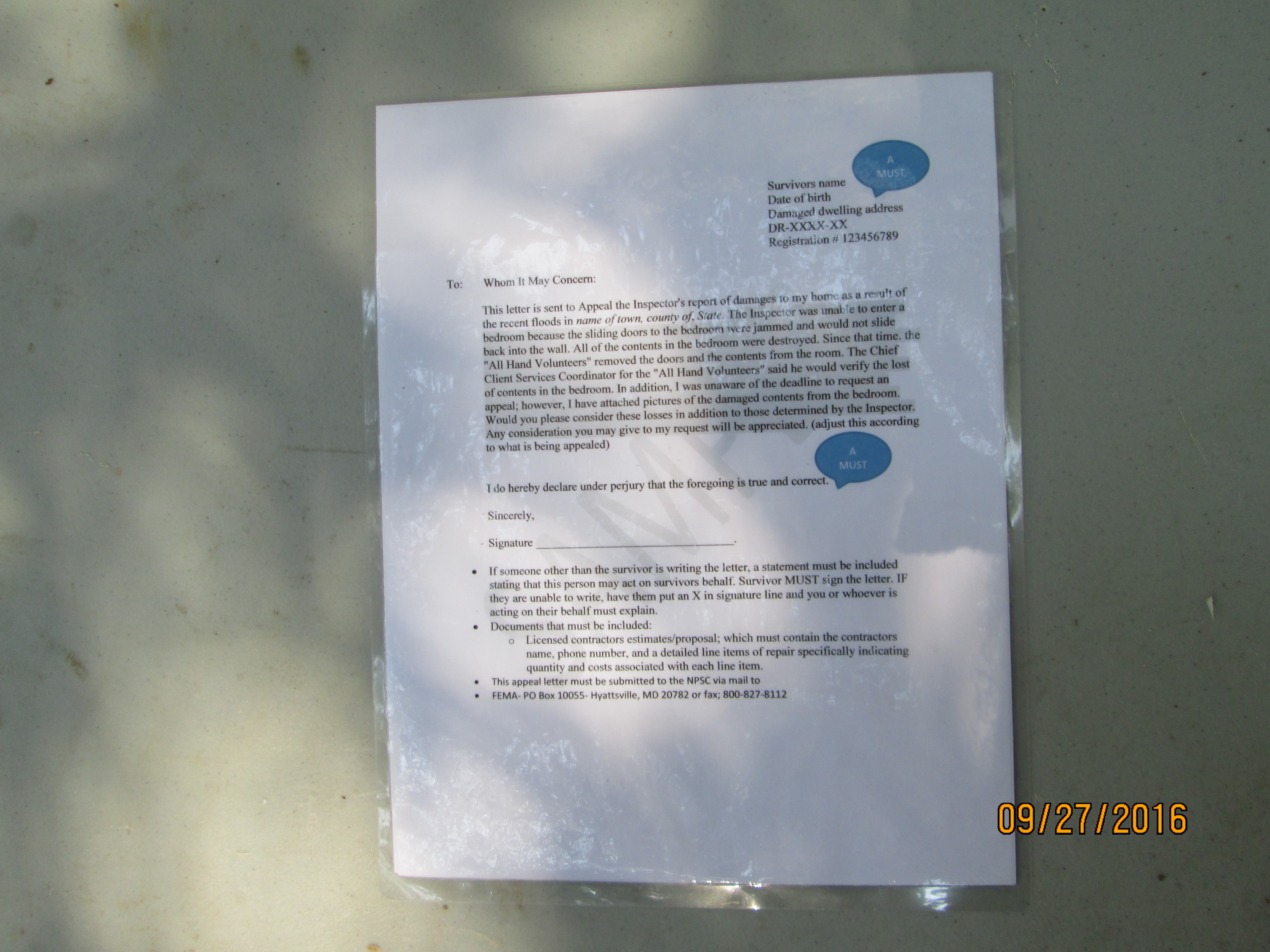
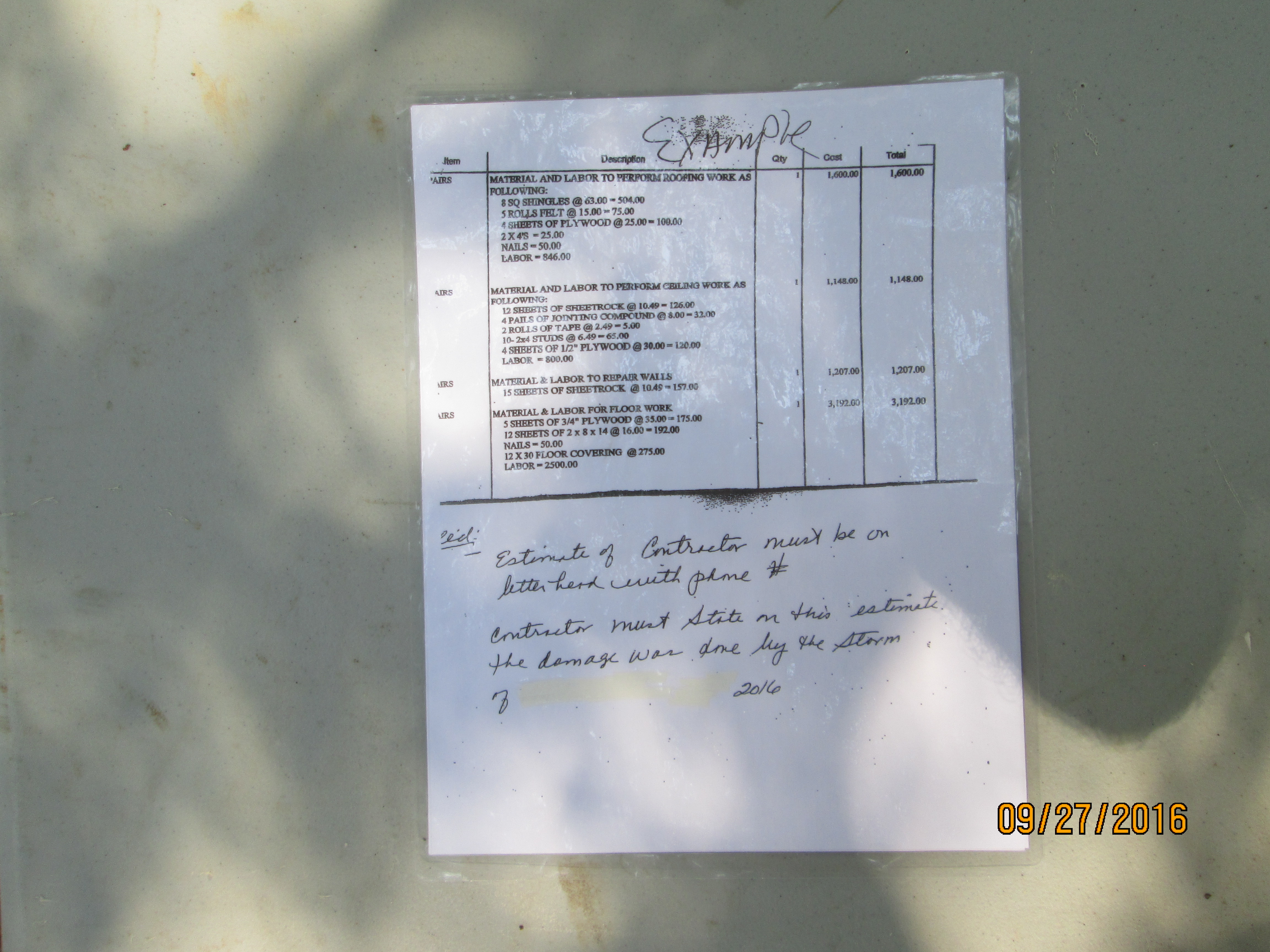
  • Verified Loss Below Threshold: Provide contractor estimates, dated photographs, and receipts that document damage exceeding the FEMA Verified Loss figure. For many disasters, the threshold is 12 inches of water or $8,000 in damage.
  • Amount or Type of Assistance Incorrect: Provide a signed, written explanation of why the amount or type of assistance is wrong, supported by documents that show the actual disaster losses.

Every document submitted with the appeal must carry the applicant's full name, FEMA application number, disaster number, pre-disaster address, and current contact information.

How to Review a FEMA Decision Letter and File an Appeal

A five-step process to read the decision letter, gather the right documents, and file an appeal that meets the requirements of 44 CFR § 206.115.

1

Read the Letter and Note the Deadline

Your Action: Read the determination letter, identify the decision type, note the reason for the decision, and record the 60-day deadline from the date on the letter.

Why It Matters: The deadline is measured from the date on the letter, not the date it is received, and a late appeal is not considered.

2

Identify the Appeal Basis

Your Action: Match the stated reason to the documents that resolve it: insurance documents, proof of occupancy, proof of ownership, contractor estimates, or a signed written explanation.

Why It Matters: The appeal must address the specific reason stated in the letter.

3

Prepare the Documents

Your Action: Gather the documents and place the applicant's full name, FEMA application number, disaster number, pre-disaster address, and current contact information on every page.

Why It Matters: FEMA requires identifying information on every submitted document, and an unlabeled document can be separated from the file.

4

Submit the Appeal

Your Action: Submit the appeal by mail to the FEMA National Processing Service Center, by fax to 800-827-8112, online at DisasterAssistance.gov, or at a Disaster Recovery Center.

Why It Matters: The submission method affects when the appeal is considered filed, so mail should be postmarked before the deadline.

5

Track the Response

Your Action: Track the appeal and expect a written disposition within 90 days of receipt, as required by 44 CFR § 206.115(e). Follow up if no response is received.

Why It Matters: The 90-day window is the basis for follow-up and for documenting that FEMA received the appeal.

What must appear on every document submitted with a FEMA appeal?

Every document submitted with a FEMA appeal must include the applicant's full name, FEMA application number, disaster number, pre-disaster primary residence address, and current phone number and address. The application and disaster numbers are printed on page 1 of the determination letter, above the name and address.

What happens if I miss the 60-day appeal deadline?

Under 44 CFR § 206.115, the appeal must be filed within 60 days of the date of the notification. An appeal filed after the deadline is not considered, and the disaster file is closed. Because HUD CDBG-DR programs rely on the FEMA Verified Loss figure, a closed FEMA file can also disqualify a household from long-term recovery grants years later.

Glossary Term: Verified Loss (FVL)

Definition: The damage amount FEMA determines after inspecting a disaster-damaged home. It is used to calculate FEMA assistance and to determine eligibility for HUD CDBG-DR grants.

In Practice: A homeowner whose FVL is $0.00 or below the damage threshold may be excluded from both FEMA assistance and long-term HUD CDBG-DR grants.

Why It Matters: The FVL figure can determine eligibility for hundreds of thousands of dollars in long-term recovery assistance years after the disaster.

Glossary Term: Determination Letter

Definition: The written notice FEMA sends after reviewing an Individual Assistance application, stating the decision, the reason, and the right to appeal.

In Practice: The letter contains the application number, disaster number, and appeal deadline that every appeal document must reference.

Why It Matters: The determination letter sets the 60-day deadline and identifies the documents FEMA will accept in an appeal.

Case Origin: Hurricane Laura and the 2016 Louisiana Floods

The appeal process described on this page reflects the process FEMA published for Hurricane Laura (DR-4559) in September 2020. The same 60-day deadline and the same required documents appeared in the notices FEMA published for the 2016 Louisiana floods, which produced more than 190,000 Individual Assistance registrants and more than 112,000 inspected homes. In that disaster, roughly 81,000 households were excluded by FEMA's Verified Loss determination, and many of them later learned that a $0.00 FVL figure also disqualified them from HUD CDBG-DR grants.

The pattern was documented in a 2006 lawsuit filed in Louisiana after Hurricane Katrina. The plaintiffs alleged that FEMA failed to provide adequate notice of the right to appeal its eligibility determinations, which the complaint described as a violation of the applicants' due process rights. The same pattern has repeated in every major disaster since, which is why the appeal deadline and the appeal documents are treated as the most important part of a recovery file.

The lesson generalizes to any declared disaster. A decision letter is not a final answer; it is the start of a 60-day appeal window that determines the FEMA Verified Loss figure and, through it, eligibility for long-term recovery assistance.
Share This Resource